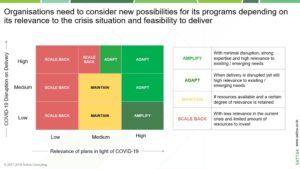
How to Adapt and Pivot your Programmes
Non-profits need a plan to steer through the rough seas, bringing clarity and revisiting relevance in order to adapt and pivot their current programmes.
Non-profits need a plan to steer through the rough seas, bringing clarity and revisiting relevance in order to adapt and pivot their current programmes.
https://www.youtube.com/watch?v=UwvXVrS8s7A The recent interim budget focused on how to enable women farmers, looking at how they can be raised up along with other smallholder farmers across India. Today, in certain key agricultural value chains like sugarcane, women make up 50% of the workforce. Yet their
India is currently undergoing a significant transformation. Over the past decade, we have moved from being the tenth-largest economy to the fifth-largest, and there is potential for us to become the third-largest economy by 2028. The government’s goal is to achieve a US$30 trillion economy by 2047, embodying the attributes
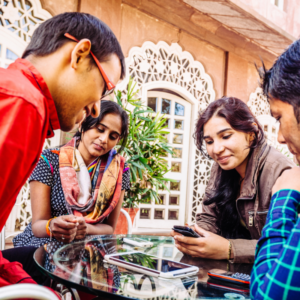
By fostering innovations in education and skill development, the CSR programme aims to empower India’s youth and drive social transformation through technology.

Pawan has over 13+ years of experience working in the private and development sector.
At Sattva, he co-leads the Domestic Philanthropy vertical which supports high net worth philanthropists to bridge the gap between their philanthropic intent and action by providing solutions across Research, Strategy and Implementation.

Businesses’ fear that the goals of driving ESG would mean an increase in their costs. Vipul Arora, a corporate sustainability and ESG expert, delves deeper.
https://youtu.be/Zbp7KvJf75g?feature=shared The story of a digitised India being catalysed through Digital Public Infrastructure (DPI) is all around us through examples like UPI and Aadhaar, but they have an equally critical role to play in enabling the economic powerhouse that are MSMEs. MSMEs are a popular topic, and

The overburdening of India’s healthcare infrastructure, especially during the second wave of the CoViD-19 pandemic in 2021, has made it evident that the healthcare system is grossly understaffed to meet the needs of a growing population.
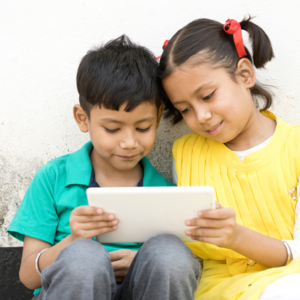
According to the Ministry of Electronics and Information Technology in India, “any individual who can operate a computer/laptop/tablet/smartphone and use other IT related tools is being considered as digitally literate.”
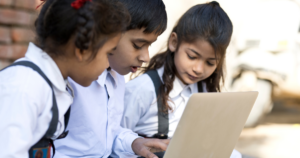
Background While various measures have been taken to transform India’s education landscape, significant challenges continue to plague the public education system such as the high student dropout rate at the secondary level (15%). Nearly 5 crore elementary school students are below the required level of foundational literacy and numeracy; only