
• View:

Debaranjan Pujahari

Debaranjan Pujahari is an accomplished professional with 16 years of experience in the social impact space leading the delivery of innovative and result-oriented solutions for agriculture development, food, and nutrition security.

As Principal for Sattva Knowledge Institute at Sattva, he is responsible for strategic advisory to Sattva’s clients by

Lakshmi Sethuraman

Lakshmi heads the health practice at Sattva where she leads all the knowledge work in health, and is an advisor across Sattva’s health projects, working in partnership with clients to build relevant and system strengthening solutions.

Rathish Balakrishnan

Rathish Balakrishnan comes with 20+ years of experience across the corporate and social sector. As Partner and Managing Partner at Sattva, he brings his extensive experience in conceptualising and implementing large-scale solutions that brings together leading foundations, corporations, civil society organisations and the government.

Saloni Gupta

Saloni Gupta brings 14 years of holistic work experience in the social impact space working across social enterprises and micro-finance institutions. As the Delivery Lead at Sattva, her role involves influencing and enhancing the impact path for corporates through CSR. She leads the delivery for West and the overall business

Touchpoint Update: Reimagining Professional Pathways for India’s Health Workforce

The Health Practice Area at the SKI conducted a webinar on ‘Reimagining Professional Pathways for India’s Health Workforce‘, on Sept. 16, 2024. The webinar hosted Dr Nachiket Mor (Visiting Scientist, The Banyan Academy of Leadership in Mental Health), Dr Gayathri Vasudevan (Chief Impact Officer, Sambhav Foundation),and Rathish Balakrishnan (Co-founder and Managing

Five non-traditional themes CSR can invest in

Our CSR conversations with corporates peak in February and March every year. Here is a set of curated, non-traditional ideas for CSR funding and strategy, along with some of the work Sattva is currently involved in.

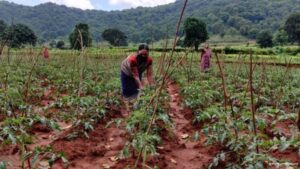
Circular Economy Models in Agriculture

Despite the lack of a common definition for circularity, there are some core principles to help us identify the concept: i. Minimising waste and pollution ii. Preserving and regenerating natural ecosystems while dealing with waste and residue iii. Promoting fairness and inclusivity across local communities that bear the social costs

  • View: