
Sustainable Sourcing in Agricultural Value Chains
Given the fragile nature of global supply chains, the scope of sustainable business development is expanding to include upstream operations like procurement.
Given the fragile nature of global supply chains, the scope of sustainable business development is expanding to include upstream operations like procurement.
https://www.youtube.com/watch?v=txaqxJycyP8 India is the third largest innovation ecosystem in the world. From India’s transformational growth in the IT sector to her rapid digitisation, innovation is truly having its moment in India today. However, despite this promising outlook, social innovation continues to face challenges to scale. Faced by

The definition of school readiness is located within a framework that has two characteristic features: transition and gaining competencies and the readiness of three entities, children, families and communities, and schools themselves. There is enough evidence at the global and national levels to establish the role of school readiness in
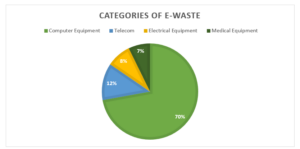
We are currently the world’s third largest e-waste generator, producing over 3.23 million metric tonnes per year, only behind the US and China. In this article, we explore the some scenarios of the future of E-waste, some opportunities and challenges, and their impact on our world.
Delivering sustained results since 2009 across emerging economies in collaboration with 0 + COMPANIES 0 + PHILANTHROPIES 0 + NON-PROFITS 0 + COUNTRIES OUR WORK At the heart of our work lies the philosophy of collaboration. Long-standing societal and environmental issues cannot be solved by any one stakeholder alone. Impact
Across the globe, HIV is more than a health concern – it is a social issue that affects not just individuals, but whole communities.
SKI’s Capital for Impact Practice Area conducted a webinar focusing on the comprehensive process of registering and listing an NGO on the Social Stock Exchange (SSE), a significant milestone in accessing capital within the impact ecosystem. The session, titled ‘From Readiness to Listing: NGOs’ SSE Journey,’ was facilitated and moderated
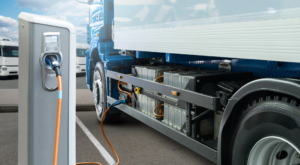
India now has over 29,000 public EV charging stations. But as the network grows, a more important question is emerging: are these chargers reliable and being set up in the right places? Today, average utilisation across public EV charging stations in India is below 10%. To understand why, it helps

Investments in climate tech in India are growing at a fast pace, amounting to over $800 million in the first half of 2022 alone. It is important to invest in technologies and infrastructure to help communities adapt to the crisis already at hand. It is hence critical to develop

The Health Practice Area at the SKI conducted a webinar on ‘Reimagining Professional Pathways for India’s Health Workforce‘, on Sept. 16, 2024. The webinar hosted Dr Nachiket Mor (Visiting Scientist, The Banyan Academy of Leadership in Mental Health), Dr Gayathri Vasudevan (Chief Impact Officer, Sambhav Foundation),and Rathish Balakrishnan (Co-founder and Managing