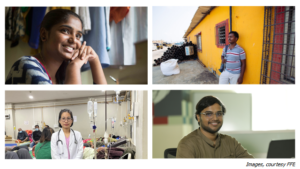
Unlocking Potential
A Comprehensive Impact Evaluation of the Foundation For Excellence’s (FFE’s) Scholarship and Beyond Scholarship Programmes
A Comprehensive Impact Evaluation of the Foundation For Excellence’s (FFE’s) Scholarship and Beyond Scholarship Programmes
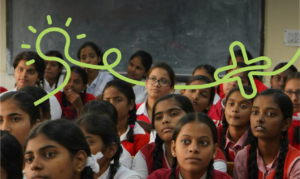
There are stark regional disparities in access and choice of science subjects in higher secondary grades for Indian girls. In 2024 48% of boys graduated from science disciplines, compared to only 39% of girls at the higher secondary level (UDISE+). In states like Andhra Pradesh, Telangana, and Tamil Nadu, 60%
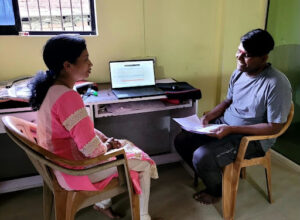
In the fight against HIV, Community Champions are torchbearers who work hard to lead their communities towards sustainable and equitable change.
We have created a ready reckoner for corporates, funders and non-profits that breaks down some of the key questions and implications of the FCRA Amendments Act 2020.
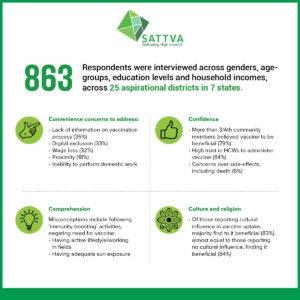
Sattva seeks to understand localised archetypes of community members vulnerable to vaccine hesitancy and to inequitable vaccine access.
Sattva had the opportunity to undertake an independent impact evaluation of Google’s Read Along application in India.
Meet Us Share Experienced and aspiring consultants, engineers, MBA grads, policy experts, lawyers, field experts, researchers, data scientists, communication specialists – we are a diverse community for sure, coming together to create a meaningful impact in the world. CAMPUS HIRING We are excited to engage with students who want to
India is currently undergoing a significant transformation. Over the past decade, we have moved from being the tenth-largest economy to the fifth-largest, and there is potential for us to become the third-largest economy by 2028. The government’s goal is to achieve a US$30 trillion economy by 2047, embodying the attributes
https://www.youtube.com/watch?v=98WBj2GXTP0 “There are three types of people who work in education today: those who know the reality of a classroom, there are those who know the reality of grassroots, but there are very few who know the reality of how government looks at education.” Tweet In this
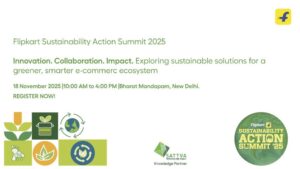
Aligned with India’s commitment to forge a more sustainable future, the Flipkart Sustainability Action Summit (SAS) 2025 will convene policymakers, sustainability experts, business leaders, and innovators to shape actionable pathways for a responsible and inclusive e-commerce ecosystem. The event will spotlight conversations on decarbonisation, e-mobility, sustainable packaging, and circularity—key levers