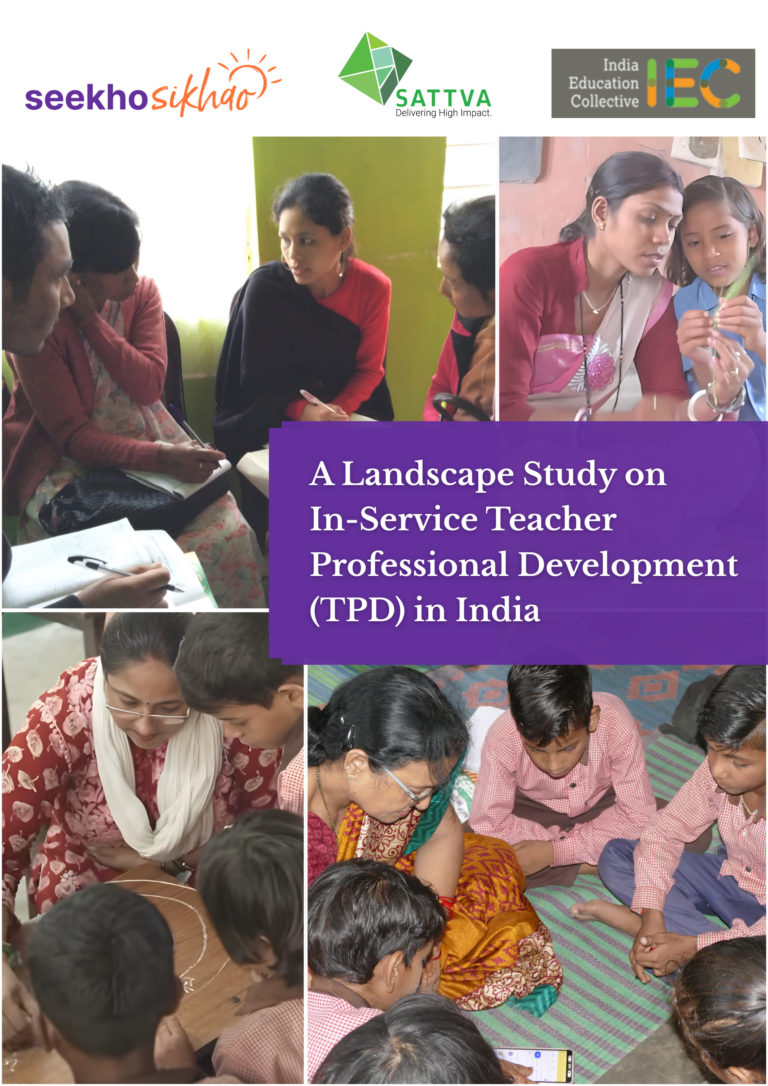

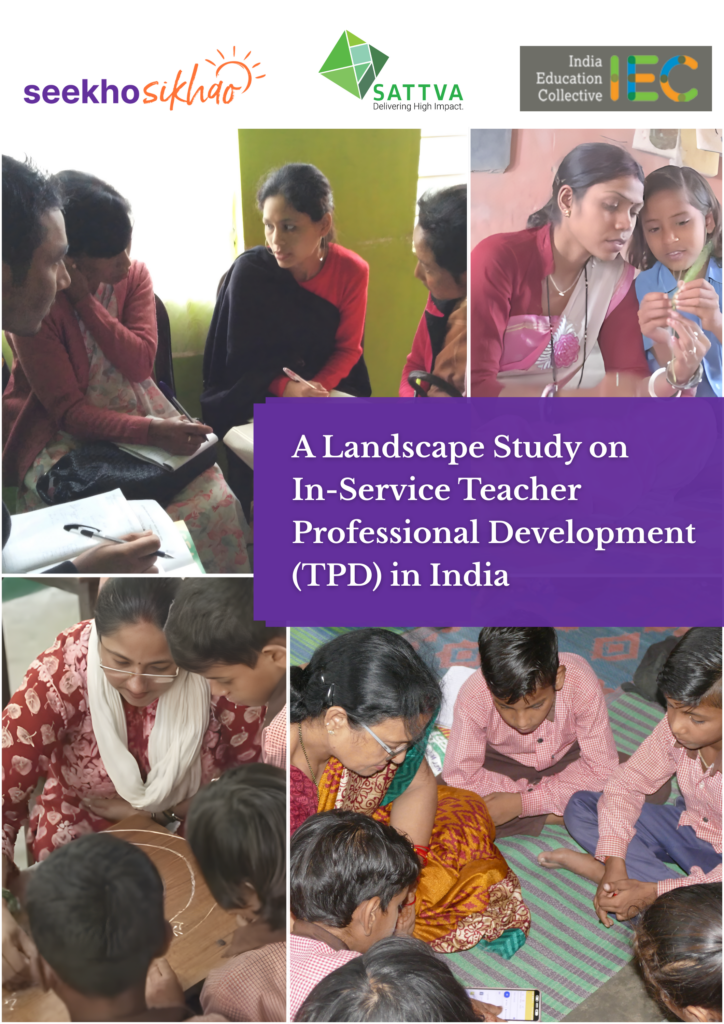
High-quality teacher professional development (TPD) can result in learning gains of up to 21 percentile points (Yoon et al., 2007), as evidenced by global research. Yet, in the context of India’s primary public schools, current TPD initiatives struggle with relevance, sustainability, and impact despite decades of policy evolution and substantial public and private investment.
While training design, content, and delivery have all improved over the last few decades, a lack of continuous support deprives teachers of the support they need to translate learning into practice. In particular, teachers need support in reconciling their training with the lived reality of India’s primary education landscape, characterised by inadequate resources and infrastructure, as well as multigrade, multilevel (MGML) classrooms and single-teacher schools.
This report, a collaborative effort by Sattva Consulting, Seekho Sikhao Foundation, and Indian Education Collective, examines how primary school teachers can be better supported to improve their practice and create quality, equitable learning environments for all students. It employs a phased, mixed-methods approach across six states: Rajasthan, Uttar Pradesh, Maharashtra, Andhra Pradesh, Jharkhand, and Meghalaya. Through Key Informant Interviews (KIIs) with 13 civil society organisations and stakeholders at state, district, and school levels, combined with teacher focus groups, the research examined TPD quality, relevance, and support mechanisms from policy design through classroom implementation.
Click on the ‘Download PDF’ link on the right side of this page to explore the full catalogue.